
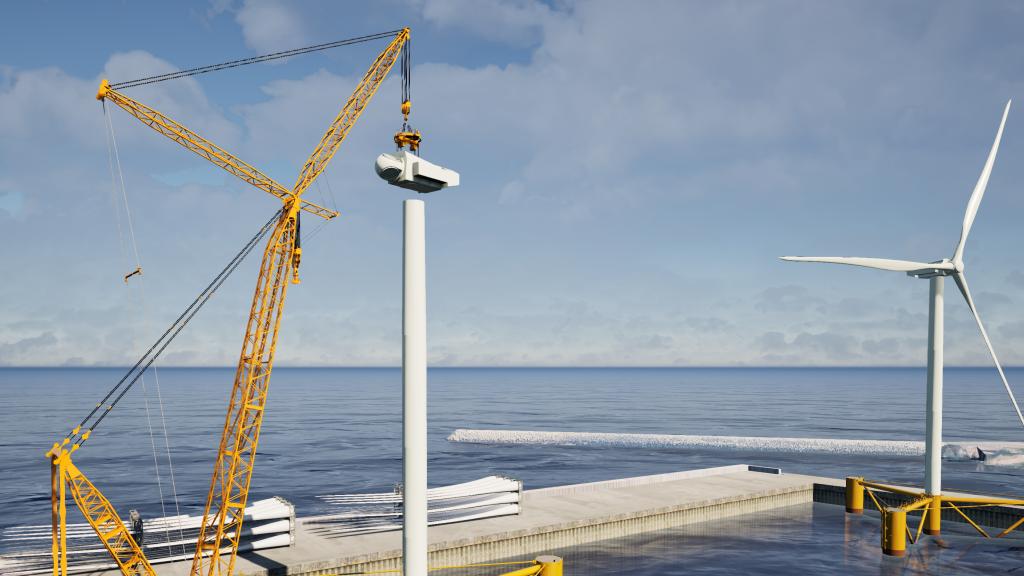
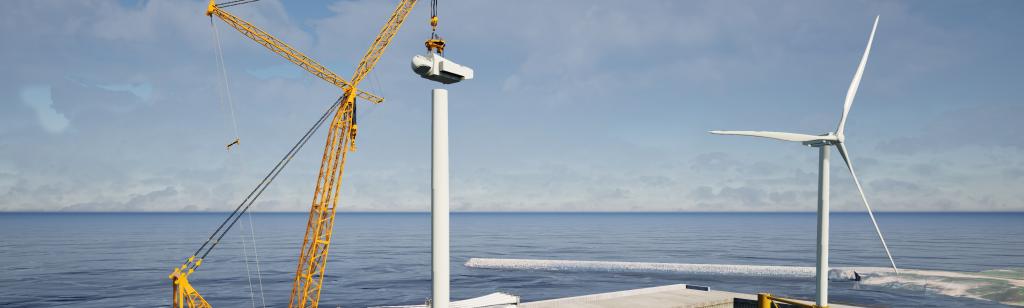
Major component replacement for floating offshore wind
The ScotWind and INTOG licencing rounds generated 23.5GW of demonstration and commercial scale floating offshore wind potential. Every project will face different challenges such as planning, consenting, and turbine design but all will require a robust and efficient maintenance strategy.
For developers, this creates a practical question: how will planned maintenance and unexpected failures be managed throughout the operating life of a floating wind farm?
Why Aberdeen?
With a significant prize on offer, competition among ports to become an MCR hub will be strong, with location, infrastructure and supply chain capability likely to be key.
Aberdeen is the closest major port to 80% of the ScotWind and INTOG floating wind pipeline. That proximity enables shorter tows, limiting the time a floating turbine is exposed to additional stresses during transit.
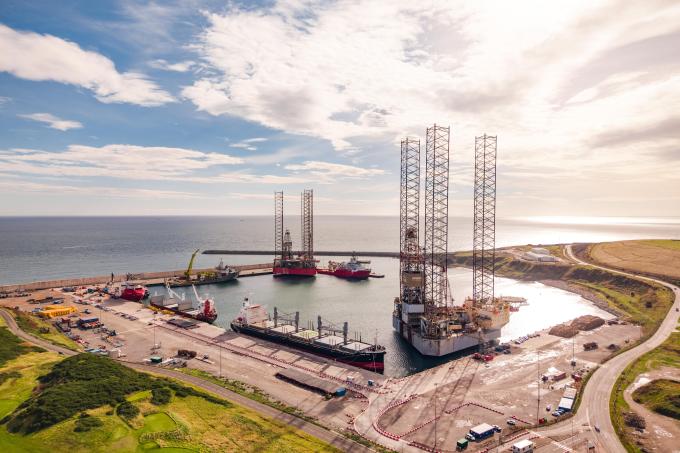
Port of Aberdeen has already invested £420 million in South Harbour. Opened in September 2023, it is tidally unrestricted and offers sheltered berths, heavy-lift quaysides, extensive laydown and storage areas, and a 165-metre-wide entrance channel capable of accommodating floating turbines. Securing the turbines at the harbour's L-shaped corner berths, also provides added protection from weather and waves which helps minimise movement during the replacement operation.
Aberdeen also has an unrivalled energy supply chain with more than 50 years of experience supporting offshore energy, with established marine, engineering and logistics expertise across the region.
Discover what’s possible for your offshore wind project
Connect with our specialists to learn more about our facilities and expertise.


